Seed, the characteristic reproductive body of both angiosperms (flowering plants) and gymnosperms (e.g., conifers, cycads, and ginkgos). Essentially, a seed consists of a miniature undeveloped plant (the embryo), which, alone or in the company of stored food for its early development after germination, is surrounded by a protective coat (the testa). Frequently small in size and making negligible demands upon their environment, seeds are eminently suited to perform a wide variety of functions the relationships of which are not always obvious: multiplication, perennation (surviving seasons of stress such as winter), dormancy (a state of arrested development), and dispersal. Pollination and the “seed habit” are considered the most important factors responsible for the overwhelming evolutionary success of the flowering plants, which number more than 300,000 species.
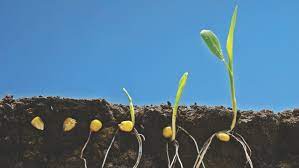
The superiority of dispersal by means of seeds over the more primitive method involving single-celled spores, lies mainly in two factors: the stored reserve of nutrient material that gives the new generation an excellent growing start and the seed’s multicellular structure. The latter factor provides ample opportunity for the development of adaptations for dispersal, such as plumes for wind dispersal, barbs, and others.
Economically, seeds are important primarily because they are sources of a variety of foods—for example, the cereal grains, such as wheat, rice, and corn (maize); the seeds of beans, peas, peanuts, soybeans, almonds, sunflowers, hazelnuts, walnuts, pecans, and Brazil nuts. Other useful products provided by seeds are abundant. Oils for cooking, margarine production, painting, and lubrication are available from the seeds of flax, rape, cotton, soybean, poppy, castor bean, coconut, sesame, safflower, sunflower, and various cereal grains. Essential oils are obtained from such sources as juniper “berries,” used in gin manufacture. Stimulants are obtained from such sources as the seeds of coffee, kola, guarana, and cocoa. Spices—from mustard and nutmeg seeds; from the aril (“mace”) covering the nutmeg seed; from the seeds and fruits of anise, cumin, caraway, dill, vanilla, black pepper, allspice, and others—form a large group of economic products.
Angiosperm seeds
In the typical flowering plant, or angiosperm, seeds are formed from bodies called ovules contained in the ovary, or basal part of the female plant structure, the pistil. The mature ovule contains in its central part a region called the nucellus that in turn contains an embryo sac with eight nuclei, each with one set of chromosomes (i.e., they are haploid nuclei). The two nuclei near the centre are referred to as polar nuclei; the egg cell, or oosphere, is situated near the micropylar (“open”) end of the ovule.
With very few exceptions (e.g., the dandelion), development of the ovule into a seed is dependent upon fertilization, which in turn follows pollination. Pollen grains that land on the receptive upper surface (stigma) of the pistil will germinate, if they are of the same species, and produce pollen tubes, each of which grows down within the style (the upper part of the pistil) toward an ovule. The pollen tube has three haploid nuclei, one of them, the so-called vegetative, or tube, nucleus seems to direct the operations of the growing structure. The other two, the generative nuclei, can be thought of as nonmotile sperm cells. After reaching an ovule and breaking out of the pollen tube tip, one generative nucleus unites with the egg cell to form a diploid zygote (i.e., a fertilized egg with two complete sets of chromosomes, one from each parent). The zygote undergoes a limited number of divisions and gives rise to an embryo. The other generative nucleus fuses with the two polar nuclei to produce a triploid (three sets of chromosomes) nucleus, which divides repeatedly before cell-wall formation occurs. This process gives rise to the triploid endosperm, a nutrient tissue that contains a variety of storage materials—such as starch, sugars, fats, proteins, hemicelluloses, and phytate (a phosphate reserve).
The events just described constitute what is called the double-fertilization process, one of the characteristic features of all flowering plants. In the orchids and in some other plants with minute seeds that contain no reserve materials, endosperm formation is completely suppressed. In other cases it is greatly reduced, but the reserve materials are present elsewhere—e.g., in the cotyledons, or seed leaves, of the embryo, as in beans, lettuce, and peanuts, or in a tissue derived from the nucellus, the perisperm, as in coffee. Other seeds, such as those of beets, contain both perisperm and endosperm. The seed coat, or testa, is derived from the one or two protective integuments of the ovule. The ovary, in the simplest case, develops into a fruit. In many plants, such as grasses and lettuce, the outer integument and ovary wall are completely fused, so seed and fruit form one entity; such seeds and fruits can logically be described together as “dispersal units,” or diaspores. More often, however, the seeds are discrete units attached to the placenta on the inside of the fruit wall through a stalk, or funiculus.
The hilum of a liberated seed is a small scar marking its former place of attachment. The short ridge (raphe) that sometimes leads away from the hilum is formed by the fusion of seed stalk and testa. In many seeds, the micropyle of the ovule also persists as a small opening in the seed coat. The embryo, variously located in the seed, may be very small (as in buttercups) or may fill the seed almost completely (as in roses and plants of the mustard family). It consists of a root part, or radicle, a prospective shoot (plumule or epicotyl), one or more cotyledons (one or two in flowering plants, several in Pinus and other gymnosperms), and a hypocotyl, which is a region that connects radicle and plumule. A classification of seeds can be based on size and position of the embryo and on the proportion of embryo to storage tissue; the possession of either one or two cotyledons is considered crucial in recognizing two main groups of flowering plants, the monocotyledons and the eudicotyledons.
Seedlings, arising from embryos in the process of germination, are classified as epigeal (cotyledons aboveground, usually green and capable of photosynthesis) and hypogeal (cotyledons belowground). Particularly in the monocots, special absorbing organs may develop that mobilize the reserve materials and withdraw them from the endosperm; e.g., in grasses, the cotyledon has been modified into an enzyme-secreting scutellum (“shield”) between embryo and endosperm.
Gymnosperm seeds
In gymnosperms (plants with “naked seeds”—such as conifers, cycads, and ginkgo), the ovules are not enclosed in an ovary but lie exposed on leaflike structures, the megasporophylls. A long time span usually separates pollination and fertilization, and the ovules begin to develop into seeds long before fertilization has been accomplished; in some cases, in fact, fertilization does not occur until the ovules (“seeds”) have been shed from the tree. In the European, or Scots, pine (Pinus sylvestris), for example, the female cones (essentially collections of megasporophylls) begin to develop in winter and are ready to receive pollen from the male cones in spring. During the first growing season, the pollen tube grows slowly through the nucellus, while within the ovule the megaspore nucleus, through a series of divisions, gives rise to a collection of some 2,000 nuclei, which are then individually enclosed by walls to form a structure called the female gametophyte or prothallus. At the micropylar end of the ovule, several archegonia (bottle-shaped female organs) develop, each containing an oosphere (“egg”). The pollen tube ultimately penetrates the neck of one of the archegonia. Not until the second growing season, however, does the nucleus of one of the male cells in the tube unite with the oosphere nucleus. Although more than one archegonium may be fertilized, only one gives rise to a viable embryo. During the latter’s development, part of the prothallus is broken down and used. The remainder, referred to as endosperm, surrounds the embryo; it is mobilized later, during germination of the seed, a process that occurs without delay when the seeds are liberated from the female cone during the third year after their initiation.
Seed size
In the Late Carboniferous Period (about 315.2 million to 298.9 million years ago), some seed ferns produced large seeds (12 × 6 cm [5 × 2 inches] in Pachytesta incrassata). This primitive ancestral condition of large seeds is reflected in certain gymnosperms (Cycas circinalis, 5.5 × 4 cm [2.2 × 1.6 inches]; Araucaria bidwillii, 4.5 × 3.5 cm [1.8 × 1.4 inches]) and also in some tropical rainforest trees with nondormant water-rich seeds (Mora excelsa, 12 × 7 cm [4.7 × 2.8 inches]). The “double coconut” palm Lodoicea maldivica represents the extreme, with seeds weighing up to 27 kg (about 60 pounds). Herbaceous nontropical flowering plants usually have seeds weighing in the range of about 0.0001 to 0.01 gram. Within a given family (e.g., the pea family, Fabaceae), seed size may vary greatly; in others it is consistently large or small, justifying the recognition of “megaspermous” families (e.g., beech, nutmeg, palm, and soursop families) and “microspermous” ones (e.g., milkweed, daisy, heather, nettle, and willow families).
The smallest known seeds, devoid of food reserves, are found in orchids, mycoheterotrophs (nongreen plants that absorb nutrients from dead organic matter and live symbiotically with mycorrizal fungi—e.g., Indian pipe, Monotropa; coral root, Corallorhiza), carnivorous plants (sundews, pitcher plants), and total parasites (members of the families Rafflesiaceae and Orobanchaceae, or broomrapes, which have seeds weighing as little as 0.001 mg—about 3.5 hundred-millionths of an ounce). Clearly, seed size is related to lifestyle. Total parasites obtain food from their host, even in their early growth stages, and young orchids are mycoheterotrophs that receive assistance in absorbing nutrients from mycorrhizal fungi that are associated closely with their roots. In both cases only very small seeds that lack endosperm are produced. Dodders (Cuscuta) and mistletoes (Viscum, Phoradendron, Amyema) live independently when very young and accordingly have relatively large seeds.
Many plant species possess seeds of remarkably uniform size, useful as beads (e.g., Abrus precatorius) or units of weight—one carat of weight once corresponded with one seed of the carob tree, Ceratonia siliqua. In wheat and many other plants, average seed size does not depend on planting density, showing that seed size is under rather strict genetic control. This does not necessarily preclude significant variation among individual seeds; in peas, for example, the seeds occupying the central region of the pod are the largest, probably as the result of competition for nutrients between developing ovules on the placenta. Striking evolutionary changes in seed size, inadvertently created by humans, have occurred in the weed known as gold-of-pleasure (Camelina sativa), which grows in flax fields. The customary winnowing of flax seeds selects forms of C. sativa whose seeds are blown over the same distance as flax seeds in the operation, thus staying with their “models.” Consequently, C. sativa seeds in the south of Russia now mimic the relatively thick, heavy seeds of the oil flax that is grown there, whereas in the northwest they resemble the flat, thin seeds of the predominant fibre flax.
Seed size and predation
Seeds form the main source of food for many birds, rodents, ants, and beetles. Harvester ants of the genus Veromessor, for example, exact a toll of about 15,000,000 seeds per acre (37,050,000 seeds per hectare) per year from the Sonoran Desert of the southwestern United States. In view of the enormous size range of the predators, which include minute weevil and bruchid-beetle larvae that attack the seeds internally, evolutionary “manipulation” of seed size by a plant species cannot in itself be effective in completely avoiding seed attack. With predation inescapable, however, it must be advantageous for a plant species to invest the total reproductive effort in a large number of very small units (seeds) rather than in a few big ones. The mean seed weight of those 13 species of Central American woody legumes vulnerable to bruchid attack is 0.26 gram (0.009 ounce). In contrast, the mean seed weight of the 23 species invulnerable by virtue of toxic seed constituents is 3 grams (0.1 ounce).
Seed size and germination
Ecologically, seed size is also important in the breaking of dormancy. Being small, a seed can only “sample” that part of the environment immediately adjacent to it, which is not necessarily representative of the generally prevailing conditions. For successful seedling establishment, there is clearly a risk in “venturing out” in adverse conditions. The development in seeds of mechanisms acting as “integrating rain gauges” should be considered in that light.
The shape of dispersal units
Apart from the importance of shape as a factor in determining the mode of dispersal (e.g., wind dispersal of winged seeds, animal dispersal of spiny fruits), shape also counts when the seed or diaspore is seen as a landing device. The flatness of the enormous tropical Mora seeds prevents rolling and effectively restricts germination to the spot where they land. In contrast, Eusideroxylon zwageri does not grow on steep slopes, because its heavy fruits roll downhill. The grains of the grass Panicum turgidum, which have a flat and a round side, germinate much better when the flat rather than the convex side lies in contact with wet soil. In very small seeds, the importance of shape can be judged only by taking into account soil clod size and microtopography of the soils onto which they are dropped. The rounded seeds of cabbage species, for example, tend to roll into crevices, whereas the reticulate ones of lamb’s quarters (Chenopodium album) often stay in the positions in which they first fall. Several seeds have appendages (awns, bristles) that promote germination by aiding in orientation and self-burial. In one study, for example, during a six-month period, awned grains of Danthonia penicillata gave rise to 12 times as many established seedlings as de-awned ones.
Polymorphism of seeds and fruits
Some plant species produce two or more sharply defined types of seeds that differ in appearance, colour, shape, size, internal structure, or dormancy. In common spurry (Spergula arvensis), for example, the seed coat (part of the mother plant) may be either smooth or papillate (covered with tiny nipple-like projections). Here the phenomenon is genetically controlled by a single factor, so all the seeds of a given plant are either papillate or smooth. More common is somatic polymorphism, the production by individual plants of different seed types, or “morphs.” Somatic polymorphism occurs regularly in saltbush (Atriplex) and goosefoot (Chenopodium), in which a single plant may produce both large brown seeds capable of immediate germination and small black ones with some innate dormancy. Somatic polymorphism may be controlled by the position of the two (or more) seed types within one inflorescence (flower cluster) or fruit, as in cocklebur, or it may result from environmental effects, as in Halogeton, in which imposition of long or short days leads to production of brown or black seeds, respectively. Since the different morphs in seed (and fruit) polymorphism usually have different dispersal mechanisms and dormancies, so germination is spread out both in space and in time, the phenomenon can be seen as an insurance against catastrophe.
Leave a Reply