An ovarian follicle consists of a developing oocyte surrounded by one or more layers of cells called follicular cells. At the same time that the oocyte is progressing through meiosis, corresponding changes are taking place in the follicular cells. Primordial follicles, which consist of a primary oocyte surrounded by a single layer of flattened cells, develop in the fetus and are the stage that is present in the ovaries at birth and throughout childhood.
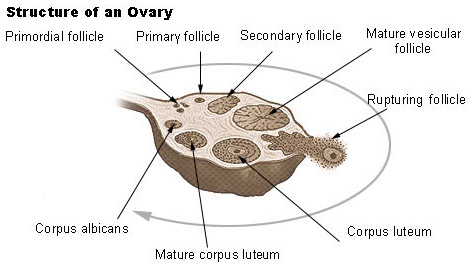
Beginning at puberty, follicle-stimulating hormone stimulates changes in the primordial follicles. The follicular cells become cuboidal, the primary oocyte enlarges, and it is now a primary follicle. The follicles continue to grow under the influence of follicle-stimulating hormone, and the follicular cells proliferate to form several layers of granulose cells around the primary oocyte. Most of these primary follicles degenerate along with the primary oocytes within them, but usually one continues to develop each month. The granulosa cells start secreting estrogen and a cavity, or antrum, forms within the follicle. When the antrum starts to develop, the follicle becomes a secondary follicle. The granulose cells also secrete a glycoprotein substance that forms a clear membrane, the zona pellucida, around the oocyte. After about 10 days of growth the follicle is a mature vesicular (graafian) follicle, which forms a “blister” on the surface of the ovary and contains a secondary oocyte ready for ovulation.
Leave a Reply